
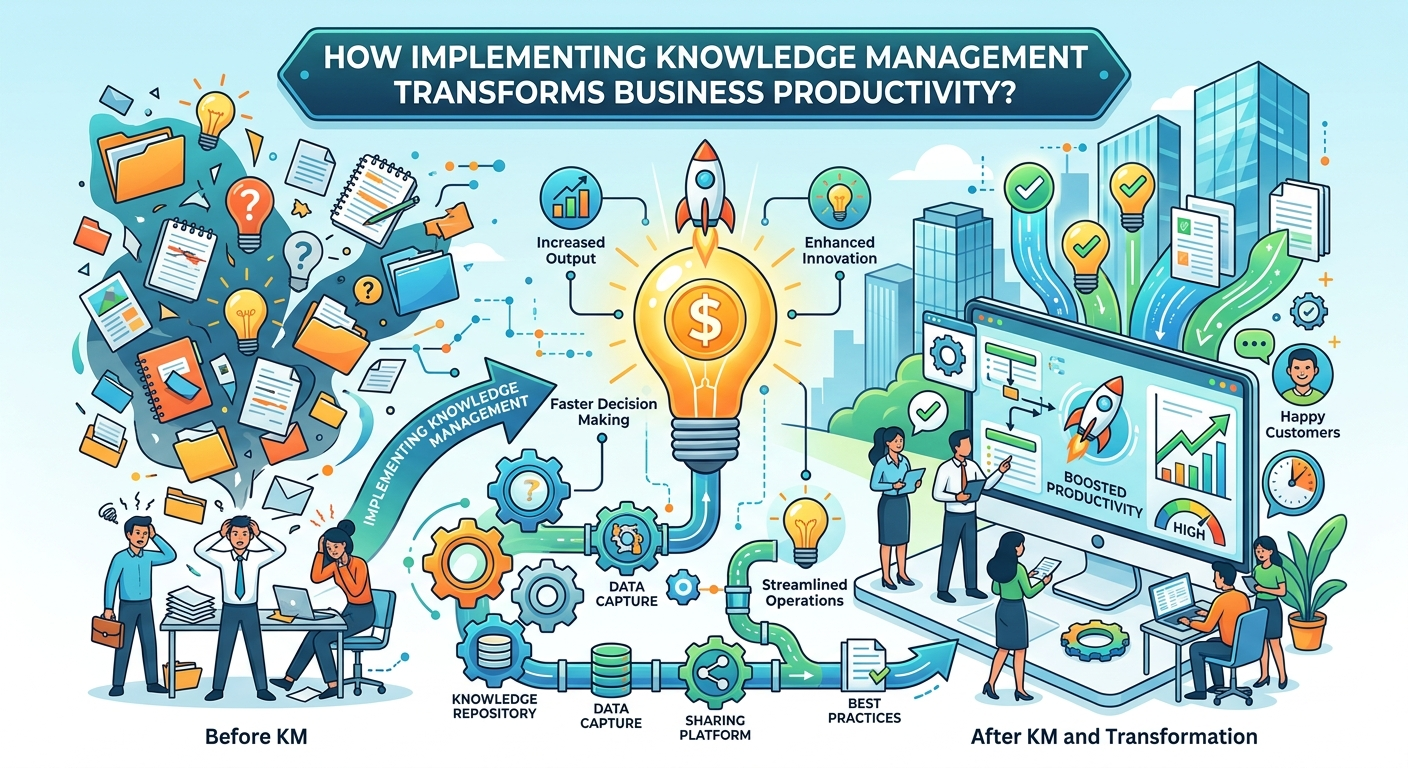

Businesses that integrate knowledge management into their infrastructure often see substantial improvements in efficiency and innovation. By effectively capturing, distributing, and leveraging collective wisdom, organizations can avoid reinventing the wheel and enable their workforce to tap into valuable insights and experiences. This results in enhanced problem-solving capabilities and productivity.
Understanding the role of knowledge management in business productivity opens the door to streamlined workflows and heightened collaborative efforts. In this article, we delve into the transformative impact that organized knowledge systems have on corporate efficiency and expertise utilization.
Implementing Knowledge Management: A Catalyst for Enhanced Productivity

Introducing knowledge management systems to a business can be the turning point towards peak operational productivity. By creating a centralized repository for information, employees have immediate access to the knowledge required for their tasks, reducing the time spent searching for information by upwards of 35%.
This efficiency boost is particularly evident in onboarding new team members. With an established system, new hires can rapidly assimilate essential knowledge and best practices, shortening the learning curve and empowering them to contribute meaningfully much sooner.
Companies can start implementing effective knowledge management by conducting an organization-wide audit to identify knowledge gaps and redundancies. knowledge management Ensuring that the chosen knowledge management system allows for easy access and user-friendly experiences is instrumental to its successful adoption and productivity gains.
Streamlining Processes and Reducing Redundancy with Knowledge Management
Knowledge management is not just about storing data but also about refining the very processes that shape the day-to-day functioning of a business. Documented processes minimize errors and provide a standard for best practices, which amplifies overall efficiency.
In environments where protocols are not clearly defined, task repetition and redundancy occur, leading to time wastage and resource drain. A knowledge management system identifies overlapping processes, outlines clear steps for task completion, and ensures that all team members are on the same page.
To reduce redundancy, leaders should evaluate their existing workflows and integrate knowledge management practices that clearly delineate roles and responsibilities. Learning from past projects and codifying successful approaches can prevent future inefficiencies and enable continuous improvement.
Fostering Innovation and Collaboration Through Knowledge Sharing
Knowledge management directly impacts an organization’s innovative capabilities by fostering an environment of collaboration and knowledge sharing. When employees feel empowered to share their insights and ideas, a culture of continuous learning and creativity is nurtured.
For instance, cross-functional teams made up of members with diverse skills and experiences can leverage collective knowledge to drive breakthrough innovations. This collaborative approach resolves complex problems more effectively and launches new initiatives that could lead to market advantages.
Creating policies that encourage employees to document and share their experiences, as well as setting up platforms for cross-departmental communication, are practical steps towards building a knowledge-centric organization. Practices such as peer mentoring programs and collaborative platforms can also be effective in spreading knowledge across the enterprise.
Measuring the Impact of Knowledge Management on Business Performance

While the benefits of knowledge management are evident, quantifying its impact on business performance can present challenges. It’s vital to establish clear metrics to track improvements in productivity, quality of work, and innovation.
Key performance indicators (KPIs) such as reduced information search times, shortened project cycles, and the number of innovative ideas implemented are tangible metrics that can reveal the effectiveness of knowledge management initiatives. These metrics, alongside regular employee feedback, offer insights into how knowledge systems enhance performance.
Leaders should implement regular evaluations of knowledge management systems to ensure continuous alignment with business objectives. Utilizing tools such as employee satisfaction surveys and customer feedback can aid in measuring the qualitative impact of these systems on the business’s bottom line.
Ultimately, the strategic implementation of knowledge management plays a transformative role in boosting business productivity. By fostering a culture of continuous learning, streamlining processes, and measuring its impacts diligently, businesses can unlock the full potential of their collective knowledge. The result is not merely more efficient operations but a powerful competitive edge that is built on the foundation of shared understanding and expertise.