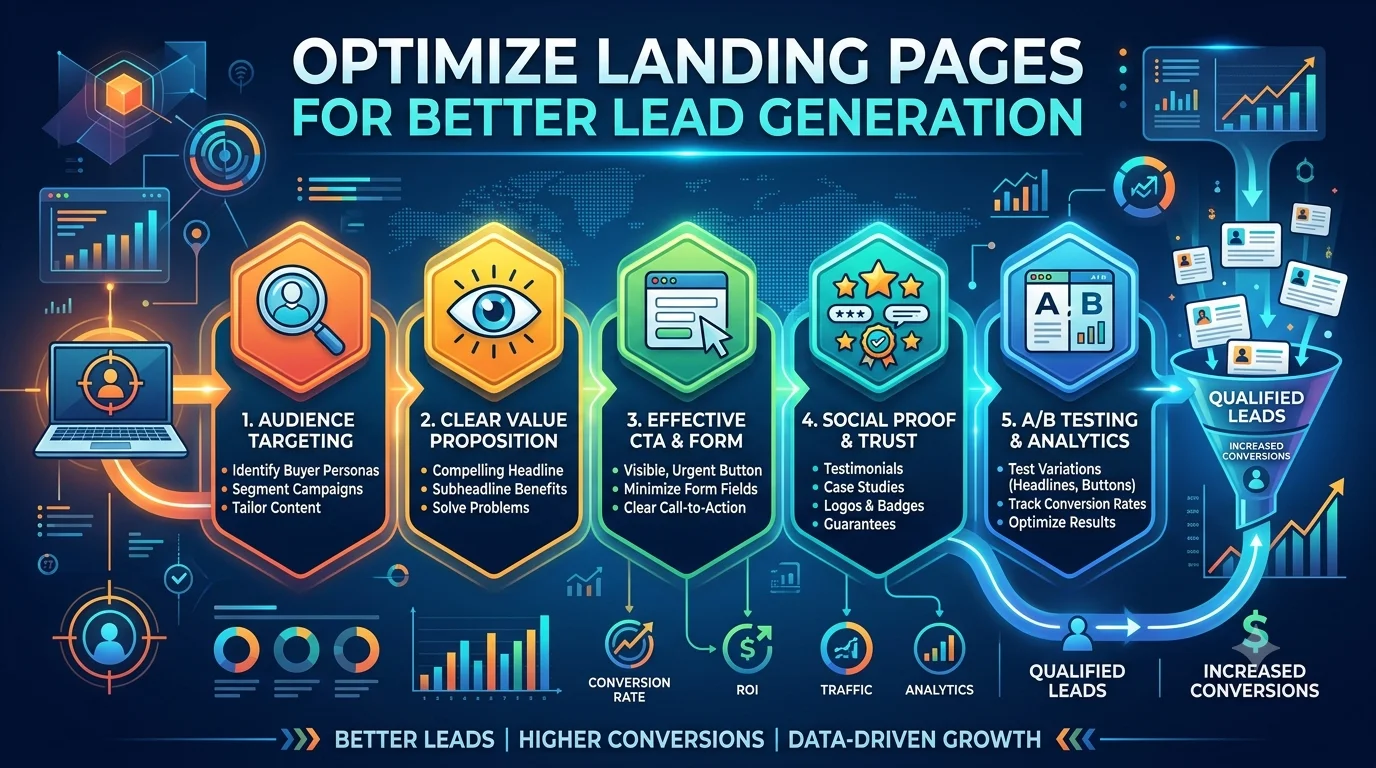

You improve landing pages by fixing important sections, clarifying the copy, and using data to guide ongoing improvements. It’s one of the most cost-effective ways to attract qualified leads online.
At Matter Solutions, we’ve worked with businesses across different industries to improve search engine performance and reduce wasted ad spend. Our team knows how to identify issues that affect conversions, user experience, and acquisition costs before they become bigger problems.
In this guide, we’ll break down the core elements of an effective lead generation page and the optimization strategies you should prioritize. We’ll also cover the key metrics to track so you can measure progress and identify areas for improvement.
Ready? Let’s get into it.
What Does a Lead Generation Landing Page Need?
A lead generation web page needs components like messaging aligned with visitor intent and trust signals for first-time visitors. When those elements are missing or poorly executed, even strong ad campaigns can struggle to generate leads.
We’ve seen businesses spend hard on traffic only to lose conversions because the sales page failed to support the buying decision.
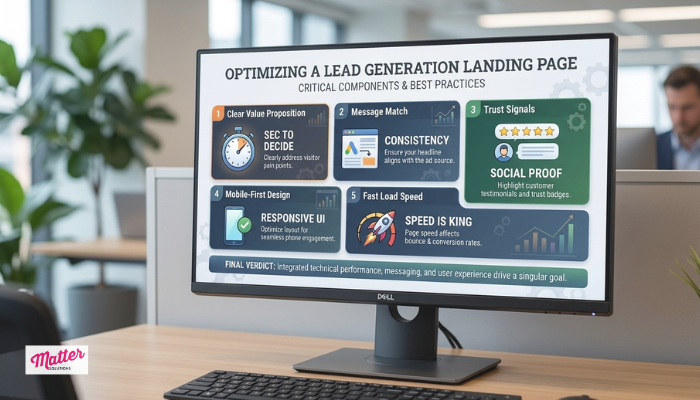
Here are 5 components your page should have in place:
- Clear Value Proposition: Visitors make up their minds within seconds of landing on your page. If the page doesn’t show how you solve their problem, they’re more likely to leave early (attention spans get even shorter on mobile devices).
- Message Match: The language and offer on your marketing page must be consistent with the paid ad (like Google Ads) or the link that brought visitors there. You’ll lose a lead you already paid for if there are discrepancies between those sources.
- Trust Signals: It’s important to show customer testimonials and trust badges on your landing page because it gives visitors a reason to fill out your form. Even a well-written page can feel like a risk to a first-time visitor without that social proof.
- Mobile-First Design: According to a SOAX research, over 60% of website traffic now comes from mobile devices. That’s why if your promotional page isn’t optimized for phones, you’ll lose visitors before they even engage with your content.
- Fast Load Speed: Your site’s load speed has a direct impact on user experience and conversion rates. In particular, performance issues often affect bounce rates long before they affect rankings or traffic.
To sum it up, home page optimization works best when technical performance, messaging, and user experience support the same goal.
How Do You Optimize a Landing Page for Lead Generation?
You optimize a landing page for lead generation by improving your headline, form, CTA, and testing process as part of an effective digital marketing strategy. Many campaign pages struggle because visitors lose interest or hesitate during the conversion process.
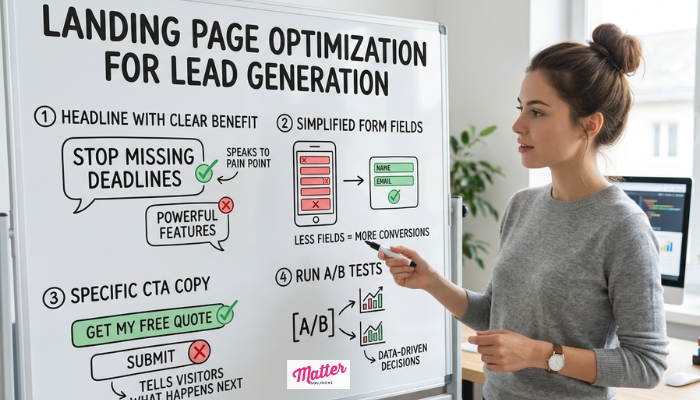
But if you focus on improving the areas we just mentioned, your page will be better equipped to capture and convert qualified traffic. We’ll explain them in more detail now.
Write a Headline with a Clear Benefit
Did you know that weak headlines can cost you a lead more than a slow page? It’s because most visitors decide within seconds whether your page feels relevant, and your headline influences that first impression.
Specifically, the headline of your lead generation page needs to speak directly to your target audience’s biggest pain point.
For example, a project management software company is more likely to convert visitors with a headline like “Stop Missing Deadlines” than a generic phrase like “Powerful Features for Teams.” One headline focuses on the visitor’s problem, while the other focuses on the product itself.
Conversion Tip: Your headline should still make sense when read completely out of context, especially for visitors who are arriving from paid ads or social media.
Simplify Your Form Fields
Believe it or not, every extra form field you add lowers your conversion rate. Visitors often leave when the form feels too time-consuming or demanding, regardless of how strong your offer may be.
So, you should ask only for the information you need to qualify a lead right now. In most cases, that’s a name and an email address (you can always collect more details later in the sales process).
Shorter forms usually convert better because they reduce friction during the sign-up process. Too much requested information upfront can discourage visitors from completing the form.
Make CTA Copy Specific to the Offer
When you have specific Calls-to-Action (CTA) on your page, it converts better than generic elements. For instance, you’ll get better results from a “Get My Free Quote” CTA than a “Submit” button.
Vague CTA copy tells visitors nothing about what happens next, and that uncertainty is enough to stop a lot of people from clicking. So, it should tell potential customers clearly what they’ll receive after they sign up.
The placement of your CTA is important, too, apart from the copy itself. We recommend putting your action prompt above the fold so visitors can act immediately. Then repeat it further down the page for anyone who needs more time to decide.
Run A/B Tests on High-Impact Elements
You find out which changes improve landing page performance through testing. One test at a time also gives you clearer data on what influenced the results.
Start your testing process with the page’s headline before you touch anything else. It’s the highest-impact element on your page. Use Google Analytics to track performance, identify where visitors are dropping off, and let the data guide your next move.
Data Insight: Tests become more valuable when paired with session recordings or heatmaps that explain visitor behavior.
How Do You Measure Landing Page Performance?
You measure landing page performance based on various data points, including how many visitors convert and how visitors engage with the page before taking action. If you want to make changes to your lead page without these numbers, you’ll be doing it purely based on assumptions (working on intuition alone rarely helps).
The metrics below will tell you where your page stands:
- Conversion Rate: This metric shows how many visitors complete your lead capture goal. It’s one of the clearest indicators of how effectively your promotional page converts traffic into leads.
- Bounce Rate: A high bounce rate mostly signals a disconnect between your ad and your landing page. It tells you that your visitors are arriving, taking one look, and leaving without engaging with your site.
- Time on Page: When visitors leave your website quickly, it usually means the content or offer isn’t holding their attention. Short time on page often signals a mismatch between visitor expectations and what the page communicates.
- Lead Quality: Some conversion pages generate a lot of leads but struggle to attract people who are actually ready to buy. In those cases, customer conversion data gives you better insight into the quality and intent behind those leads.
No single metric tells the full story, which is why it’s important to evaluate your sales page’s performance from multiple angles.
Next Step for Your Landing Page Optimization
A well-optimized page needs the right components, clear messaging, and consistent tracking to keep delivering leads over time.
You should start your optimization process with the five core components we discussed and improve main areas like your headline, form, and CTA. Your performance metrics can help you identify what needs attention afterward.
If you’re ready to build landing pages that bring in real results, contact our team at Matter Solutions today. We’ll show you what’s possible to achieve from your website.