
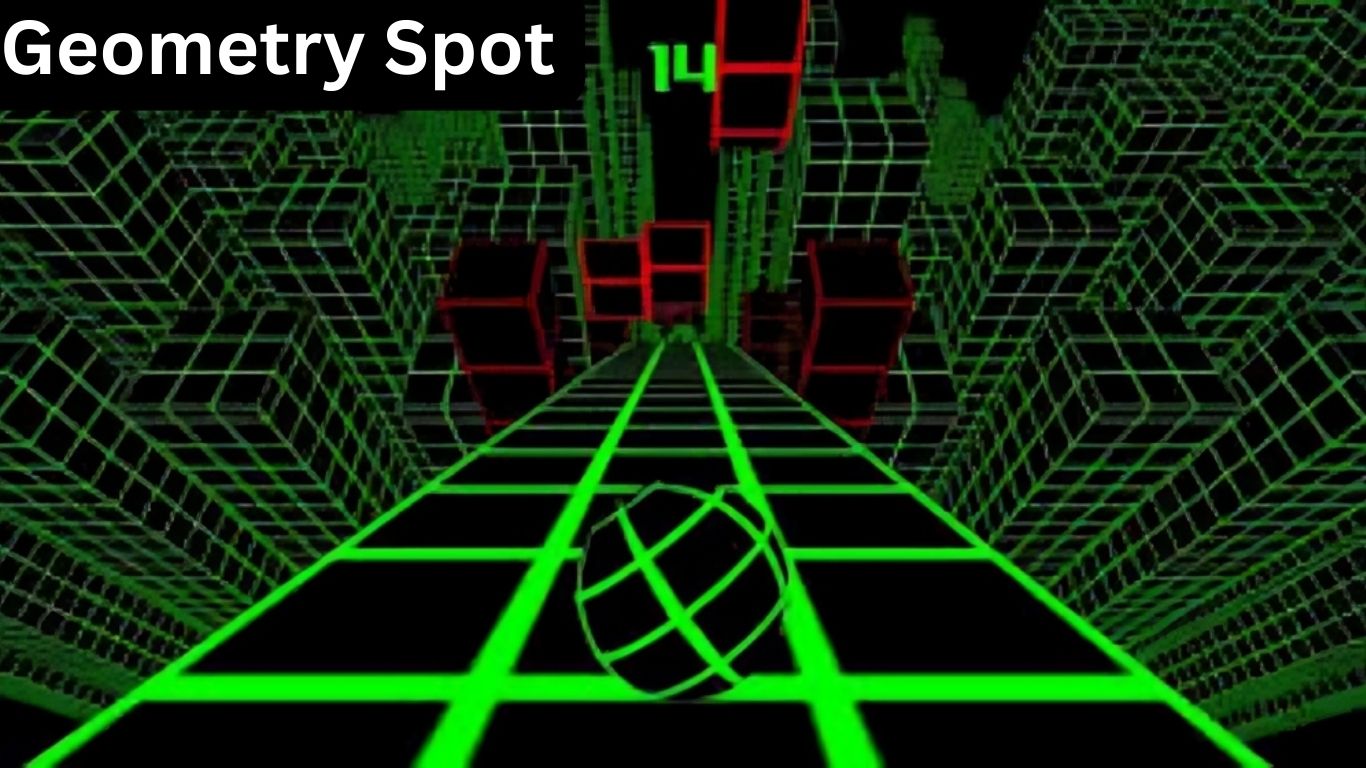

Geometry has always been a vital part of mathematics education, yet many students struggle to connect abstract concepts with real understanding. Digital learning platforms have started to bridge that gap, and geometry spot has become one of the most talked-about resources among students, teachers, and casual learners. By combining interactive tools with engaging activities, it transforms traditional geometry practice into something far more dynamic and accessible.
The growing popularity of geometry spot reflects a broader shift in education toward digital learning environments. Instead of relying only on textbooks and static diagrams, learners can explore shapes, angles, and spatial reasoning through interactive experiences. This approach helps students understand concepts faster while keeping them motivated.
Today’s learners often prefer platforms that mix education with entertainment. Geometry spot responds perfectly to this demand by blending geometry lessons with browser-based activities that reinforce mathematical thinking. As a result, it has gained attention across classrooms, tutoring programs, and self-study communities.
The Evolution of Digital Geometry Learning
Mathematics education has changed dramatically over the last decade. Teachers once relied mainly on chalkboards and printed worksheets to explain geometric ideas. While those tools still have value, technology now offers new ways to visualize shapes, transformations, and measurements.
Platforms like geometry spot represent this evolution in learning. Instead of memorizing formulas without context, students can experiment with concepts and instantly see how shapes behave. When learners adjust angles, rotate figures, or test solutions, they develop a deeper understanding of geometry.
Digital platforms also remove many barriers that used to slow down learning. Students can practice anytime without waiting for classroom instruction. This flexibility helps learners progress at their own pace, which is especially helpful for complex topics like geometry.
At the same time, teachers benefit from resources that make lessons more engaging. Interactive geometry practice allows educators to demonstrate ideas visually and encourage participation from every student in the room.
Why Geometry Spot Is Gaining Attention
The appeal of geometry spot lies in its balance between education and accessibility. Instead of overwhelming users with complicated interfaces, the platform keeps things simple while offering meaningful mathematical challenges.
Students appreciate how easy it is to start exploring. The interface focuses on clarity, allowing learners to concentrate on solving problems rather than navigating confusing menus. This simplicity makes the platform useful for beginners and experienced learners alike.
Another reason for its popularity is how it blends educational puzzle games with real mathematical concepts. Many students feel more comfortable experimenting with geometry when it feels like a challenge rather than a strict academic task.
Because of this approach, geometry spot has become a common recommendation among teachers searching for effective student learning tools. It offers a fresh alternative to repetitive worksheets and static diagrams.
How Geometry Spot Improves Concept Understanding
One of the biggest challenges in geometry is visualizing relationships between shapes and angles. Students often struggle to picture how figures change when rotated, reflected, or scaled.
Geometry spot addresses this challenge by providing interactive geometry practice. Instead of imagining transformations, learners can manipulate shapes directly on the screen. When they move a point or adjust a line, the results appear immediately.
This instant feedback strengthens comprehension. Students quickly learn which strategies work and which ones do not. Over time, this experimentation builds stronger spatial reasoning skills.
Another advantage is how the platform supports exploration. Learners can test different approaches without fear of making mistakes. This environment encourages curiosity, which is essential for mastering mathematical concepts.
As students interact with problems repeatedly, geometry stops feeling abstract. It becomes something tangible and understandable.
The Role of Interactive Math in Modern Education
Modern education increasingly relies on digital tools to keep students engaged. Traditional teaching methods often struggle to compete with the interactive experiences students encounter outside the classroom.
Geometry spot fits naturally into this new learning environment. It provides activities that feel closer to exploration than memorization. This makes it easier for students to stay focused while practicing important skills.
Interactive tools also support different learning styles. Some students learn best by reading explanations, while others prefer visual demonstrations. A platform that combines both approaches can reach a wider range of learners.
In addition, interactive geometry practice encourages problem solving rather than passive learning. Students must think through challenges and apply logic to reach the correct answer.
These experiences strengthen analytical thinking, which benefits learners far beyond mathematics.
Geometry Spot in the Classroom
Teachers are always searching for ways to make mathematics more engaging. Geometry can be especially difficult to teach because many concepts rely on spatial reasoning rather than simple calculations.
Integrating geometry spot into classroom lessons can help bridge this gap. When teachers introduce a new concept, they can demonstrate it through interactive visuals instead of static diagrams.
Students also benefit from hands-on exploration during lessons. Rather than simply copying notes, they actively participate in discovering how shapes behave. This participation increases both understanding and retention.
Many educators also use the platform as part of classroom math activities. After explaining a concept, teachers can assign interactive challenges that allow students to practice what they just learned.
This approach reinforces lessons while keeping students engaged.
Geometry Spot as a Self-Learning Resource
Not every student learns at the same pace. Some need additional practice after class, while others want to explore topics beyond the standard curriculum.
For independent learners, geometry spot provides a valuable environment for self-study. Because it is browser-based, students can access it from home without complicated software installations.
Self-guided learning encourages responsibility and curiosity. Students who explore geometry on their own often develop stronger problem-solving skills because they experiment freely.
Another advantage is that learners can revisit concepts as many times as needed. Repetition helps strengthen understanding, especially for topics that require visualization.
Over time, consistent practice on platforms like geometry spot can significantly improve confidence in mathematics.
The Importance of Engaging Math Platforms
Many students develop anxiety around mathematics, especially when lessons feel repetitive or confusing. Engaging platforms help reduce this stress by presenting problems in a more approachable way.
Educational puzzle games can transform challenging topics into enjoyable activities. When learners feel motivated, they are more willing to persist through difficult problems.
Geometry spot benefits from this motivational effect. Instead of forcing memorization, it invites exploration. Students gradually build skills while enjoying the process.
Engagement is especially important for younger learners who may struggle with abstract thinking. Interactive tools help them visualize concepts that would otherwise remain difficult to understand.
This combination of learning and enjoyment explains why digital math platforms are becoming essential in modern education.
Geometry Spot and the Growth of Online Learning
Online learning has expanded rapidly in recent years. Students now expect educational resources to be available anytime and anywhere.
Platforms like geometry spot fit perfectly within this trend. Because the system works through a browser, users can access it from computers, tablets, or school devices without complex setup.
Accessibility is one of the platform’s greatest strengths. Learners from different regions and educational backgrounds can explore the same interactive content.
This universal access helps create a more inclusive learning environment. Students who might not have advanced classroom resources can still experience high-quality interactive geometry practice.
As online education continues to evolve, platforms like geometry spot will likely play an even larger role in supporting independent learning.
Supporting Critical Thinking Through Geometry
Geometry does more than teach students how to calculate angles. It develops logical reasoning and spatial awareness, which are important skills in many fields.
When students engage with interactive geometry practice, they must analyze patterns and predict outcomes. These activities strengthen critical thinking abilities.
Geometry spot encourages this analytical mindset by presenting challenges that require careful observation. Learners must evaluate different possibilities before choosing a solution.
Over time, these exercises build confidence in problem solving. Students become more comfortable experimenting with strategies and learning from mistakes.
These skills extend beyond mathematics. Logical reasoning and spatial awareness are valuable in science, engineering, architecture, and technology.
The Future of Interactive Geometry Platforms
Educational technology continues to advance rapidly. As software becomes more sophisticated, learning platforms will likely become even more immersive.
Geometry spot already demonstrates how effective digital tools can be when designed thoughtfully. Its simple structure and engaging activities show that education does not need to be complicated to be powerful.
Future updates to platforms like this may include more advanced visualizations, adaptive learning features, and deeper integration with classroom systems.
These innovations could make geometry education more personalized. Students might receive challenges tailored to their strengths and weaknesses, allowing them to progress more efficiently.
Even as technology evolves, the core purpose remains the same. Tools like geometry spot aim to make mathematics understandable, engaging, and accessible for every learner.
Geometry Spot as a Bridge Between Learning and Curiosity
The most successful educational platforms inspire curiosity rather than simply delivering information. When students feel curious, they naturally explore concepts more deeply.
Geometry spot encourages this mindset by presenting geometry as something to discover. Instead of memorizing rules, learners experiment with shapes, angles, and transformations.
Curiosity often leads to unexpected insights. A student experimenting with a simple figure might suddenly recognize a pattern that explains a larger concept.
This sense of discovery is one of the most powerful motivators in education. It turns learning from a task into an experience.
By fostering exploration, geometry spot helps students see mathematics as a creative and logical discipline rather than a set of rigid formulas.
Frequently Asked Questions About Geometry Spot
What is geometry spot used for?
Geometry spot is an online platform designed to help students explore geometric concepts through interactive activities. It allows learners to practice shapes, angles, and spatial reasoning in a dynamic environment. By combining visual tools with engaging challenges, the platform helps students understand geometry more effectively than traditional worksheets alone.
Is geometry spot suitable for beginners?
Yes, geometry spot is suitable for beginners as well as advanced learners. The platform’s design focuses on simplicity and accessibility, which makes it easy for new users to start exploring geometry. Students can gradually build their skills while experimenting with interactive exercises that reinforce fundamental concepts.
Can teachers use geometry spot in classrooms?
Many educators integrate geometry spot into classroom lessons because it supports visual demonstrations and hands-on learning. Teachers often use it during classroom math activities to help students see how geometric principles work in real time. This interactive approach can improve both engagement and comprehension.
Does geometry spot help improve math skills?
Consistent practice on geometry spot can strengthen several mathematical skills, including spatial reasoning, logical thinking, and problem solving. Because students actively manipulate shapes and test ideas, they gain a deeper understanding of geometry concepts over time.
Why do students enjoy geometry spot?
Students often enjoy geometry spot because it blends learning with exploration. The platform feels more like solving puzzles than completing traditional assignments. This interactive experience keeps learners motivated while still reinforcing essential mathematical principles.