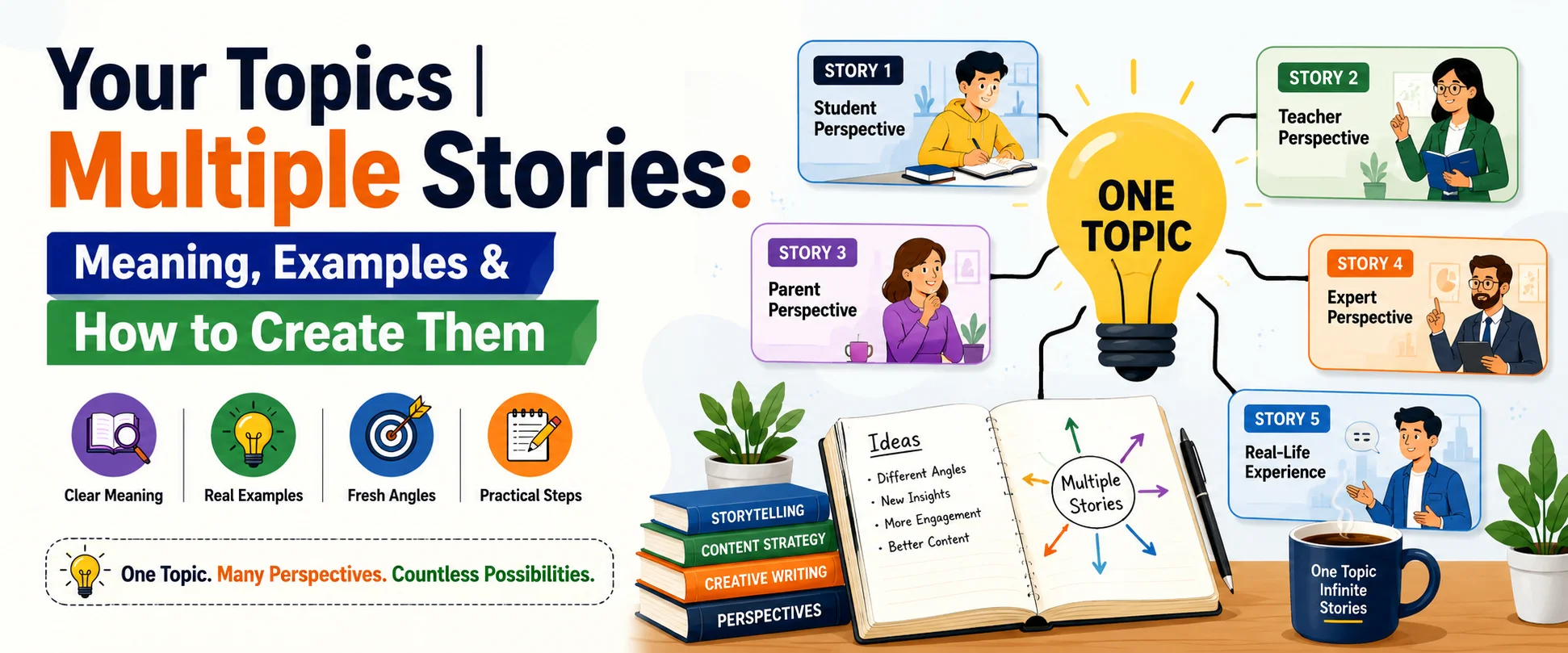

What if one simple topic could become several useful stories? That is the basic idea behind your topics multiple stories. Instead of telling one story from only one angle, you explore a central idea through different people, experiences, situations, or viewpoints.
This approach can make multi-story content more useful and engaging. It can also give writers more storytelling ideas for blogs, social media, videos, presentations, and other types of content.
What Does “Your Topics | Multiple Stories” Mean?
“Your Topics | Multiple Stories” refers to a storytelling and content approach where one core topic leads to several connected stories or perspectives. Each story can have its own character, setting, point of view, or outcome while still connecting to the same central idea.
For example, imagine your main topic is remote work. You could tell the story from an employee’s point of view, a manager’s perspective, and a business owner’s experience. These are different stories, but they all explore the same topic.
This is also known as multi-narrative storytelling or perspective-based storytelling. It is important to note that the phrase is mainly a content and storytelling concept, not one universally recognized platform or formal writing standard.
How One Topic Can Become Multiple Stories
A single topic can produce many story variations when you change the angle without losing the main theme. Writers can use different characters, points of view, situations, settings, tones, or audiences.
For example, take the topic “a lost wallet.” One story could follow the person who lost it. Another could focus on the person who found it and decided to return it. A third could explore what happens when someone keeps the wallet.
The central topic stays the same, but the narrative perspective, conflict, emotions, and outcome change. This creates connected stories instead of repeating the same plot.
You can also change the setting or genre. A topic about artificial intelligence could become a simple beginner story, an expert perspective, or a fictional story about a worker using AI for the first time.
The key is to create a genuine difference in the point of view or story purpose.
Why Use Multiple Stories for One Topic?
Using multiple stories can help readers understand a subject more fully. Different viewpoints can show how the same issue affects different people.
It can also create stronger emotional connections. A personal experience may help readers relate to a topic, while an expert perspective can provide useful facts and supporting evidence.
Multiple stories can also help you reach different audiences. A beginner may prefer a simple explanation, while an experienced reader may want a deeper perspective.
For content creators, this approach provides more content ideas without forcing unrelated subjects together. It can support a broader content strategy while keeping every piece connected to one main topic.
Best Ways to Create Strong Multi-Story Content
Start with a broad but focused core topic. It should be large enough to explore but specific enough to keep your content focused.
Next, list three to five genuinely different angles. Think about different people, experiences, questions, problems, or outcomes. These angles become the foundation of your storytelling framework.
Give every story a clear purpose. Ask what the reader should learn, feel, or understand after reading it.
Then make the stories meaningfully different. Change the perspective, evidence, situation, or content format instead of changing only names or locations.
Finally, keep everything connected to the same central idea. A unified theme helps readers understand why the stories belong together.
A useful rule is simple: multiple stories should add new information, not repeat the same idea. Strong narrative writing gives every story its own reason to exist.
For additional guidance on creating helpful, people-first content, you can refer to Google Search Central’s helpful content guidance.
Examples of “Your Topics | Multiple Stories”
Remote work is a simple example. An employee could share a personal experience about working from home. A manager could explain how remote teams are handled. A business owner could discuss costs, productivity, and results. The topic remains the same, but the audience perspectives are different.
Artificial intelligence offers another example. One story could explain AI to a beginner. Another could present an expert perspective. A third could describe a worker’s real-world experience using an AI tool.
Climate change can also support multiple stories. A family might describe how changing weather affects daily life. A scientist could explain the research. A business owner could discuss changes made to reduce environmental impact.
Even a simple topic such as a lost wallet can create several narratives. You can tell the story from the owner’s perspective, the finder’s perspective, or the perspective of someone who makes the wrong choice.
These examples show how one topic can support different characters, conflicts, emotions, settings, and outcomes.
How to Avoid Repetitive or Weak Stories
Creating several stories does not automatically make content better. If every story says the same thing, readers gain little value.
Make each story answer a different question or explore a different unique angle. Give each narrative a clear storytelling purpose and avoid changing only small details.
For factual topics, use reliable supporting evidence when needed. For fictional examples, make it clear that the story is fictional. Keeping facts, opinions, and creative interpretation separate also improves trust.
Use transitions to connect the stories smoothly. At the same time, give each story enough independence to provide something new.
A good multi-story article should feel like several useful pieces working together, not the same article copied several times.
How to Use Multiple Stories for Content Creation and SEO
Multiple stories can be useful across many content formats. A blog can explore one subject through several perspectives, while social media posts can turn those perspectives into separate pieces of content.
Videos and podcasts can use different speakers or storylines. Presentations can use multiple viewpoints to explain a complex subject in a simple way.
For SEO, related stories can also become part of a content cluster. For example, a main article about remote work could connect to separate articles about remote productivity, home office setup, remote management, and employee experiences.
Internal linking can help readers move between these connected topics. However, simply creating more pages does not guarantee better rankings. Each page should satisfy a real audience need and provide useful information.
The best approach is to use content repurposing and different storytelling formats when they genuinely improve the reader’s experience. Quality, relevance, and usefulness should come before the number of stories you create.
For basic guidance on narrative writing and storytelling structure, Purdue OWL’s guide to narrative essays is a useful educational reference.
Frequently Asked Questions
What does “Your Topics | Multiple Stories” mean?
“Your Topics | Multiple Stories” means taking one central topic and exploring it through several connected stories, perspectives, or formats. For example, remote work could be discussed through an employee’s experience, a manager’s viewpoint, and a business owner’s perspective. Each story adds something different while staying connected to the same topic.
What is it called when a story has multiple stories in it?
A story with several connected storylines can be called a multi-narrative story, multiple-story narrative, or parallel narrative. The exact term depends on how the stories are structured. Usually, these narratives follow different characters, events, or viewpoints while connecting through a shared theme or central plot.
How can one topic become multiple stories?
Start with one core topic and look for different characters, viewpoints, situations, conflicts, settings, or outcomes. For example, artificial intelligence could become a beginner explanation, an expert perspective, and a worker’s real-world experience. Changing the angle while keeping the central idea creates useful story variations.
What are some good story topics?
Good story topics are subjects that offer different experiences, opinions, or outcomes. Examples include friendship, technology, travel, education, remote work, artificial intelligence, family, climate change, and personal growth. A strong topic should interest your audience and give you enough room to explore different perspectives.
What are the 7 main types of stories?
One popular storytelling framework identifies seven basic plot types: Overcoming the Monster, Rags to Riches, The Quest, Voyage and Return, Comedy, Tragedy, and Rebirth. These are broad story patterns rather than strict rules. A story can use one main type or combine elements from several types.
What are the four types of storytelling?
There is no single universal list of four storytelling types. One common way to classify storytelling is by format: oral, written, visual, and digital storytelling. Other frameworks classify stories by purpose, structure, or audience. The best format depends on the message, audience, and content type.